Voters are clear. Politicians are listening. This is good.
By Mike Pierce | November 4, 2026
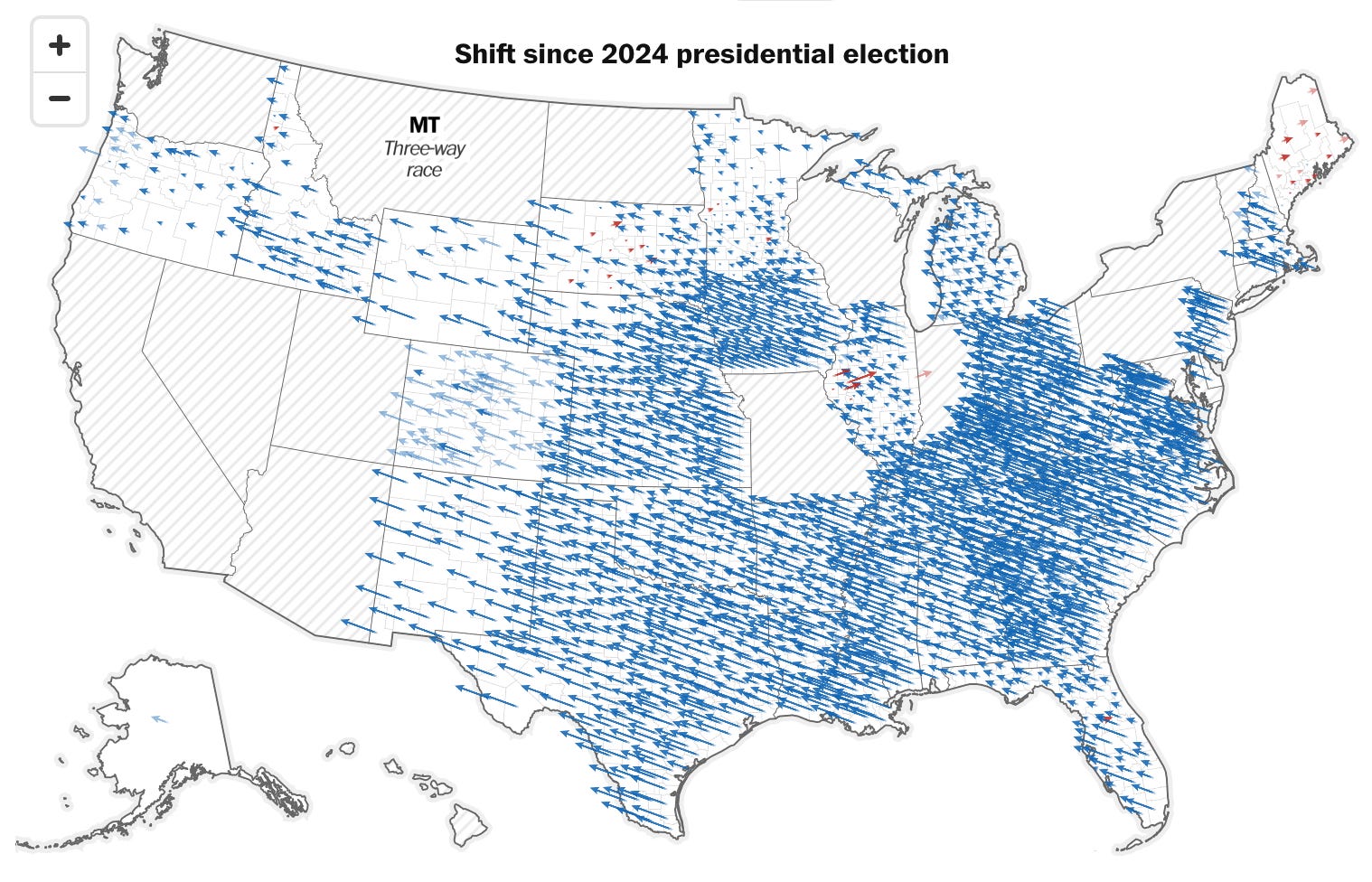
On Tuesday, voters retaliated against incumbent elected officials in Washington and in state capitals across the country, electing a new generation of candidates who ran on economic populist platforms. These candidates shaped their political messages to fit the contours of their local races while emphasizing a shared set of concerns about rising prices, concentrated corporate power, and the crushing debts American families are forced to take on as a consequence of incumbents’ failure to address America’s affordability crisis.
Debt is the immediate, measurable consequence of President Trump’s failure to confront rising prices.
Half of all American adults—111 million people—have a credit card balance they cannot pay off each month. Fourteen million families are in debt to a utility company. More than 85 million Americans owe debt to pay for a car—jumping nearly 40 percent in less than a decade. More than 9 million student loan borrowers have defaulted on their loans—a new borrower every nine seconds as of 2025—with millions more at risk of long-term damage to their credit scores. More than 40 percent of Americans are in debt to pay for healthcare, whether that’s an unpaid medical bill, a high-rate credit card balance, or a Buy Now, Pay Later loan.
Credit card debt, utility debt, student debt, and especially medical debt shaped the message and political program embraced by an ideologically diverse set of candidates who won competitive races across the country.
- In Texas, James Talarico anchored his personal biography in his own struggle to manage medical debt, credit card debt, and student debt, and ran on a bold debt relief agenda.
- In Kansas, Adam Hamilton made Senator Roger Marshall’s predatory medical debt collection tactics a focus of his case against the incumbent, pushing Marshall to spend the closing days of his losing campaign denying allegations of financial abuse.
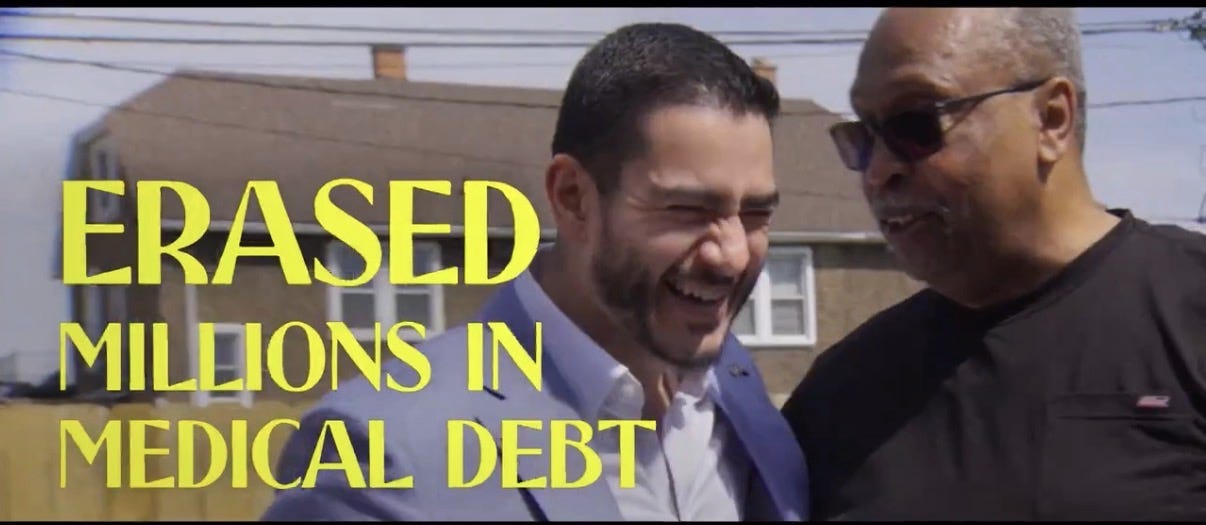
- In Michigan, Abdul El-Sayed connected his case for Medicare for All to Michiganders’ struggles with medical debt—one of the most immediate economic consequences of our broken healthcare system.
The banks, tech companies, and financial firms pushing Americans into debt have been among the biggest and most visible beneficiaries of President Trump’s brazen corruption. Over the past 18 months, dozens of giant corporations have won corporate pardons, white-washing these firms’ frauds and denying relief to victims in communities across the country. On the campaign trail, candidates across the country tied corporate crime to corruption in Washington, pledging to confront these abuses and fight for working people.
- In Georgia, Jon Ossoff hammered the connection between economic populism and both political and corporate corruption, arguing that “[t]his corruption is why nothing works for ordinary people […] It’s why your insurance company gets away with denying your cancer treatment after you paid your premiums for decades.”
- In Ohio, Sherrod Brown tied together his fight against data centers and tech oligarchs with Ohio families’ struggles to heat their homes and the economic consequences of corruption, explaining last night that “[y]ou all know how corruption is woven into everything. Working people pay for this corruption. Higher utility bills, higher grocery prices, higher drug prices.”
- Also in Georgia, newly elected Attorney General Tanya Miller made her case to voters that confronting concentrated corporate power is a key plank in her consumer protection agenda, explaining that “[y]ou have to be in a position and have the courage to investigate powerful corporations who are behaving badly in our economy…whether that means they are unlawfully colluding with each other to keep prices high… and rigging the economy against working and middle class folks, they need to be held to account.”
Beyond the highest profile races, Americans sent hundreds of new state lawmakers to state capitals, gave Democrats complete control of government in Pennsylvania, Michigan, Minnesota, Wisconsin, and Arizona, and elected new populist state attorneys general in Georgia, Texas, Iowa, Ohio, and Kansas, each with a mandate to take immediate action to address rising prices and fix an economy that has failed working people.
More than a year ago, we made the case on the politics of debt, laying out that “an economic populist policy agenda on debt also makes for popular politics.” In July, our polling showed strong bipartisan support for policies to relieve Americans’ debts, and to prosecute the predatory lenders and loan companies fueling and profiteering off the debt crisis. More polling last week further confirmed how rising debts were informing voters’ decisions at the polls.
Last night’s election results again validated our theory of the case:
“Voters are begging for leaders who understand the politics of debt. Debt is the through line between many of voters’ top concerns—the rising cost of living, distrust of elite institutions across our society, and pervasive corruption.”
We are in a new governing moment, and this incoming class of economic populist policymakers—at every level of government—must meet it.
###
Mike Pierce is the Executive Director of Protect Borrowers. This blog was also published on In Debt, a Protect Borrowers Substack.