Welcome to the Age of “Desperation Finance.” We Hate It Here.
By Persis Yu and Mike Pierce | June 18, 2026
Across President Trump’s economy, millions of Americans are facing impossible financial decisions and turning to debt to cover the basics. As families make the harrowing choice between paying for groceries or covering medical bills, Wall Street and Silicon Valley see big business: an emerging market that capitalizes on families’ affordability crisis and traps people in debt in a moment of desperation.
Where finance once helped families build wealth, buy homes, and get an education, today we see finance play the opposite role—extracting wealth and harvesting fees from working people on the brink.
Welcome to the age of “desperation finance.”
Today, banks, lenders, fintechs, and other financial firms exploit Americans’ financial desperation by pushing debt at the point of sale—reducing or eliminating barriers to financing in the checkouts of grocery stores, brick-and-mortar retailers, landlords, doctors’ offices, and across the internet. By offering these financial products to people on the cusp of deciding whether to make a purchase or payment, financial companies can frame their offerings as the only or easiest option available and leverage our desperation, lack of time, and social pressure, driving us into new types of debt.
Once, families owed debts for things like rent, utilities, and medical bills when they didn’t make a payment—unpaid bills turned into debts owed directly to landlords, power companies, and hospitals. Consequences spiraled across these families’ lives, as evictions, utility shutoffs, and medical bankruptcies often followed quickly behind. Advocates for tenants, ratepayers, and patients meticulously documented how these debts flowed through the financial system, as shady debt buyers and lawsuit mills drove families to financial ruin.
Financial companies now get to these same families earlier in the process—pushing an exotic set of financial products on people who may be uncertain about whether they can make ends meet. A loan to cover a late rent payment may only be possible when you need it if you agree to pay a junk fee each month, starting right now. That root canal can only be scheduled if you agree to finance the procedure up front. The plumber won’t stop the flood in your basement unless you agree to make dozens of payments with a double digit APR. It’s easy to see why landlords, healthcare providers, and other merchants like desperation finance—they get paid up front and the debt collection becomes someone else’s problem.
Our desperation is their pitch.

Over the past decade, the boom in Buy Now, Pay Later (BNPL) lending captured the attention of investors, lenders, and merchants. Everyone who has shopped online has seen these products: an embedded finance option when shopping on Amazon or at Target or a chance to spread out your payments when purchasing airline or concert tickets.
The BNPL sales pitch is simple: when shoppers use credit, they buy more stuff. Fintech companies could underwrite more accurately than the credit card banks, and would pass these savings on to their customers in the form of even cheaper credit. Even cheaper credit helps people buy an even bigger basket of stuff.
But what if that “bigger basket of stuff” is filled with rent, food, power, emergency home repairs, or health care?
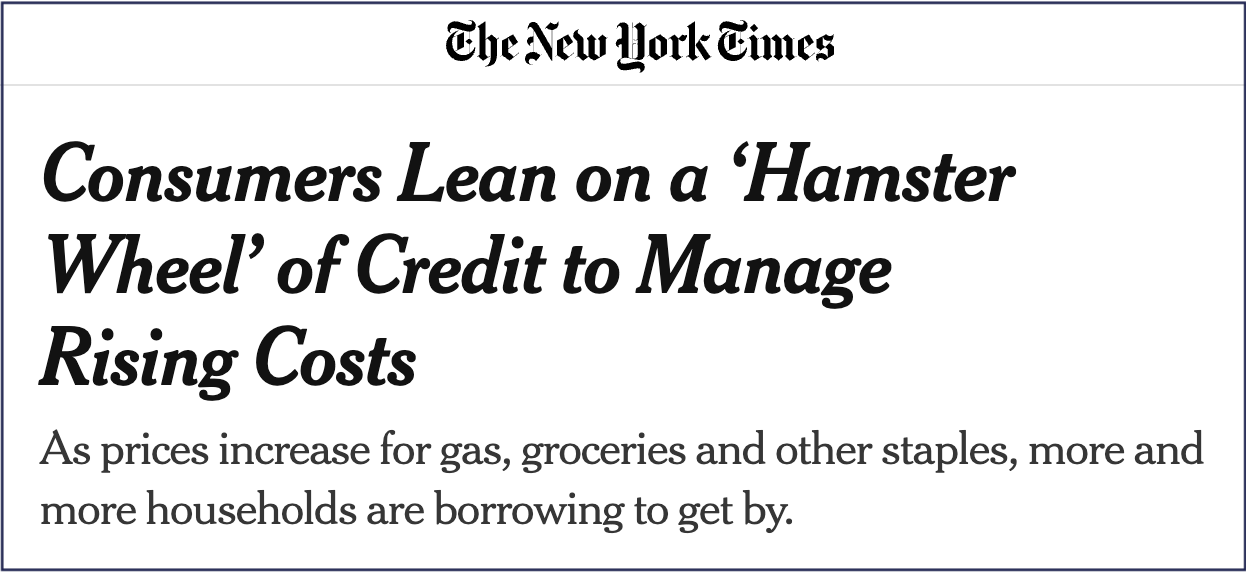
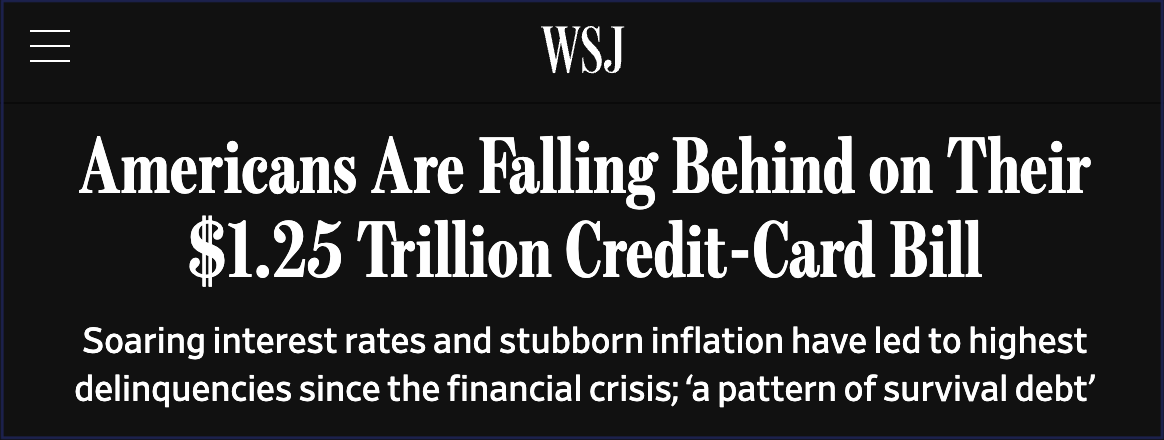
As we’ve written previously at IN DEBT, as costs keep climbing, evidence suggests that families are thinking about both credit cards and BNPL loans differently today—using them as shadow grocery debt, medical debt, or rental debt. When costs keep climbing and wages stay flat, debt fills in the gap.
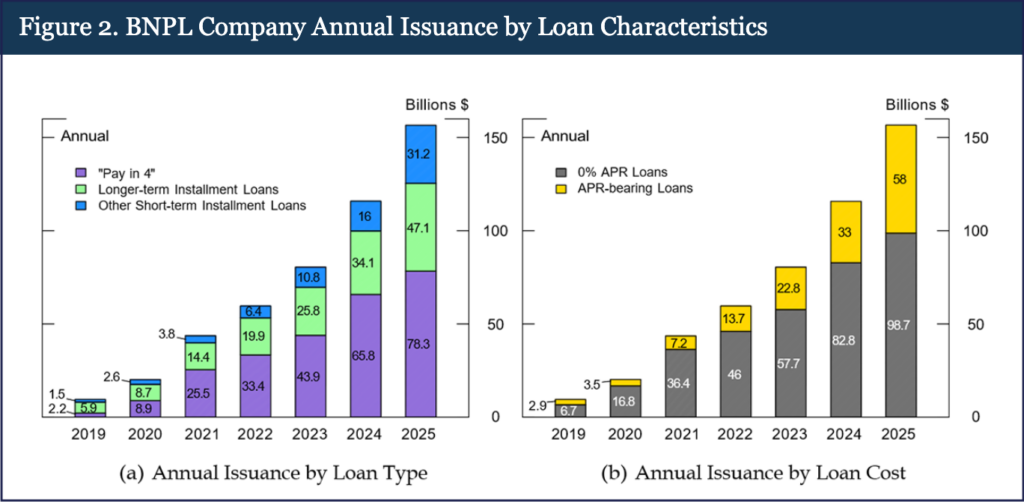
The ubiquity of these new financial products has inured the general public to the social and broader economic costs of point-of-sale financing, just as this emerging industry pivots from allegedly free BNPL loans to interest-accruing, longer-term installment loans. Earlier this year, the Federal Reserve Board of Governors charted this transition, noting that of the $160 billion in BNPL loans extended in 2025, more than a third of this volume—nearly $60 billion—were interest-accruing financial products.
The danger of these products is not that some people can pay for Taylor Swift tickets in four slightly more convenient payments (though maybe there is some danger in what this does to the price of tickets); but rather the moment that a desperate mom is at the checkout counter having to choose between food needed to feed her family or a finance product whose terms are neither transparent nor easy enough to digest in the moment.
This is the moment of desperation—the moment that leaves millions of people at the mercy of Wall Street banks and Silicon Valley tech companies ready to maximize profits at our expense. Once you see it, it’s everywhere:
- Rising healthcare bills and shrinking health insurance drives patients into debt. A new set of fintech lenders aggressively market financial products to healthcare providers—offering a win-win for both lenders and for providers concerned about the shrinking footprint of health insurance and their patients’ ability to pay their bills. As fintech lender Cherry brags to dentists in its marketing materials, finance means “more patients” and “more treatments,” including a “+50% increase in transaction size.”
- Rising rents and pressure from corporate landlords drives tenants into debt. As we reported earlier this year with our partners at Towards Justice, fintech lenders have entered the so-called proptech market, offering corporate landlords a platform to collect rent payments from tenants and building a new market for Rent Now Pay Later loans loaded with junk fees and complicated loan terms.
- Tech giants like Uber and DoorDash set low rates for gig work, creating an opening for high-cost, predatory lenders to drive gig workers into debt. Following the path cleared by payday lenders a decade ago, a set of fintech lenders are exploiting gig workers’ supposed status as “independent contractors” to push-high cost business loans on financially vulnerable drivers and deliveristas. The company Giggle Finance (yes, really) claims in its pitch, “we’re here to help you stack the game in your favor and provide you the support and peace of mind to hustle the way you want.”Workers tell a different story, warning of high fees, aggressive debt collection, and an endless debt trap.
The financialization of families’ desperation comes as the federal government pulls back on oversight over this growing market. Last year, the Consumer Financial Protection Bureau—the federal regulator that oversees all nonbank consumer lending in America—rescinded key protections for families using BNPL loans and announced it would no longer enforce the law against these firms, denying families the right to dispute improper payments or seek refunds.
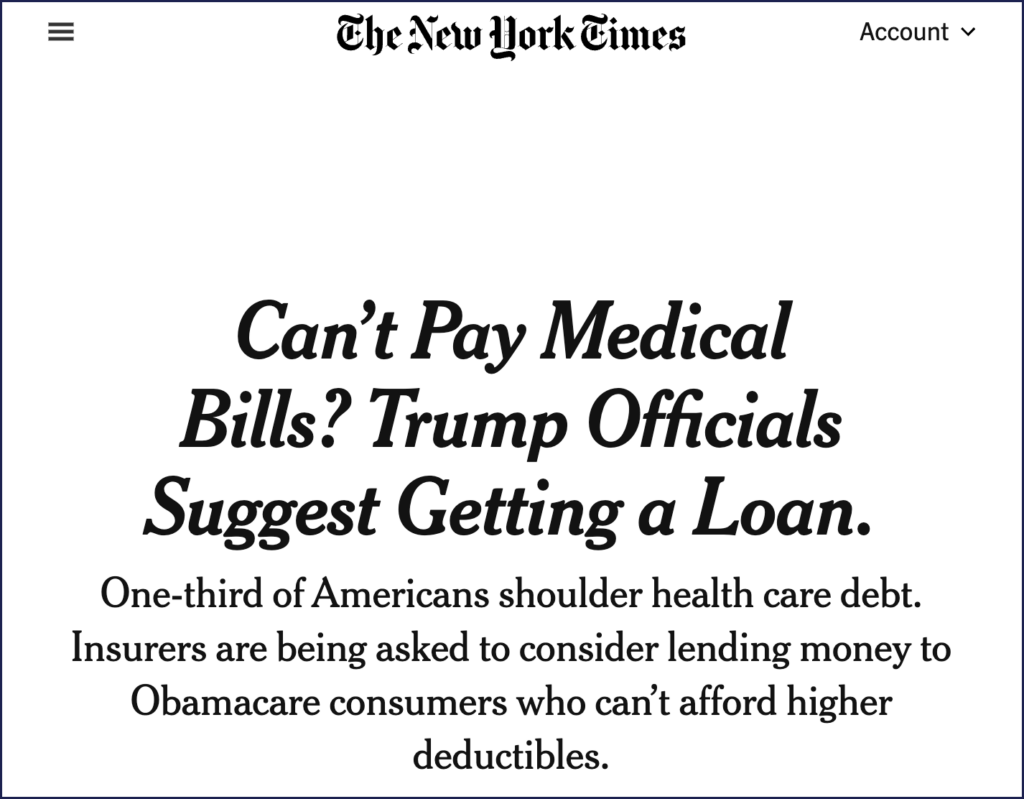
Trump’s disastrous economic policy has made everything worse. Tariffs, shortages, and screw worms are driving up the cost of food. The One Big Beautiful Bill Act slashed healthcare and nutrition assistance, ratcheting up costs for working class families. Trump’s reckless war in Iran continues to put upward pressure on energy prices, even as he caves to public pressure to lower the cost of gasoline. Trump’s approach to shrinking deductibles and climbing out-of-pocket healthcare costs appears to be an explicit embrace of desperation finance. As the New York Times (and IN DEBT) both reported, new federal rules propose that insurance companies themselves offer families loans to finance healthcare costs that increasingly skimpy plans won’t cover.
It doesn’t need to be this way.
Whether by affirmative policy or through lawmakers’ neglect, too many American families no longer have the means to live a decent life. Policymakers have a duty to these families to take the spread of desperation finance head on—cracking down on predatory lending and junk fees, policing unlicensed lending, and protecting families from aggressive debt collection. Each of these actions are urgent and critical, but only address the symptoms of a worsening affordability crisis. Americans deserve an economy where debt doesn’t limit opportunity.
###
Persis Yu is the Deputy Executive Director and Managing Counsel of Protect Borrowers.
Mike Pierce is the Executive Director and co-founder of Protect Borrowers.
This blog was also published on In Debt, a Protect Borrowers Substack.